
This year, for spring break, I took 4 days off of work. I wanted to spend one day with each of the boys and what better way than outside where there’s no cell service?!
I have fond memories from my childhood of canoeing with my grandpa. There are a few lakes nearby connected by canals that provide for a nice trip. If you’re in the area, I recommend booking a seat on the scenic boat tour. It’s an inexpensive diversion and the captains always provide some entertaining facts about the area. For example, one of the houses on the lake is where Mister Rogers lived while he attended the local college.

I still have the canoe from the picture above. It hangs in my garage and still works great! Paddling on the lakes is fun, but the place I have the fondest memories of is the Rock Springs Run. A short 45-minute drive from our house, this 8 mile long spring-fed river through protected forest area is part of the “first congressionally designated National Wild and Scenic River basin in Florida.” https://www.floridastateparks.org/parks-and-trails/rock-springs-run-state-reserve/history. It’s on this river that I remember learning how to properly pilot a canoe.
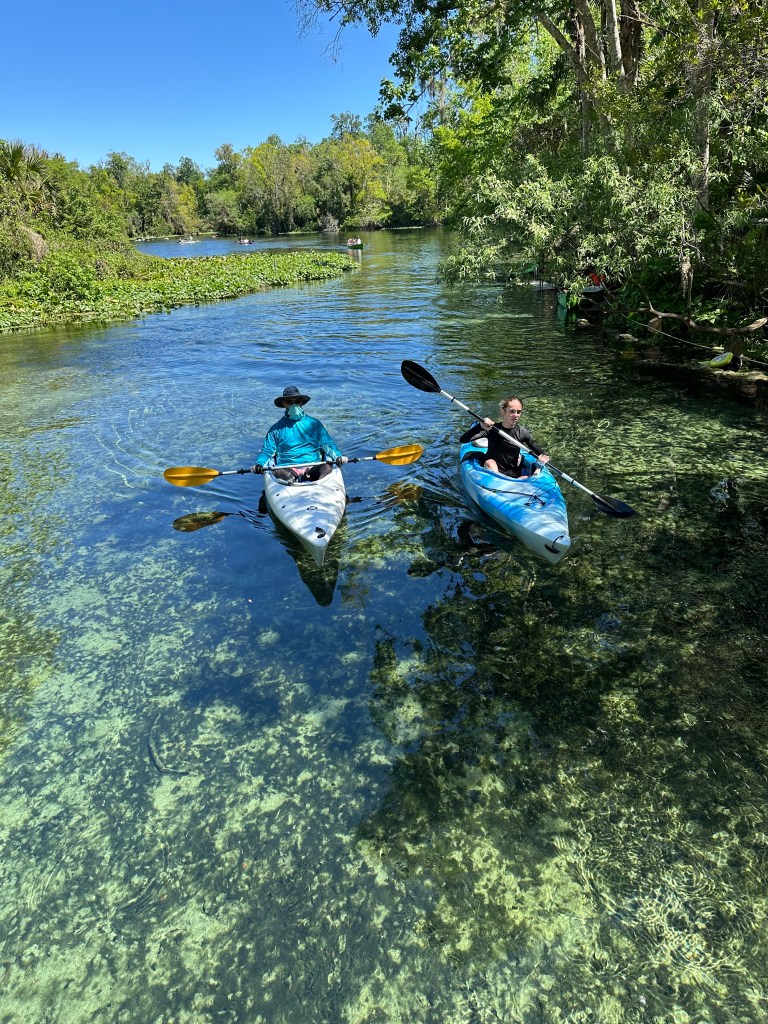
The plan for spring break was to paddle the Rock Springs Run, from King’s Landing to Wekiva Island, maybe with a side quest to swim in Wekiva Springs.
Understanding the waterway
Starting at King’s Landing (green marker below), there’s a 1 mile upstream paddle named the “emerald cut” that takes you as far as Kelly Park (white marker below). You can’t paddle into the park but if you could, you’d end up at the start of the river, where the spring water is flowing out of the ground. Kelly Park offers tubing and swimming. Downstream from King’s Landing is a 7.5-mile paddle down the Rock Springs Run through wilderness (with barely any cell service) where it finally joins the Wekiwa Springs Run (pink marker below) to form the Wekiva River. The Wekiwa Springs Run is about a 3/4 mile run starting at the Wekiva Springs (red marker below) and ending when it joins with the Rock Springs Run. The final leg is from where the two runs meet (pink marker below) to Wekiva Island (blue marker below) Official map here. The Wekiva River continues for another 14 miles before it joins the St. John’s river, but we stop at Wekiva Island.
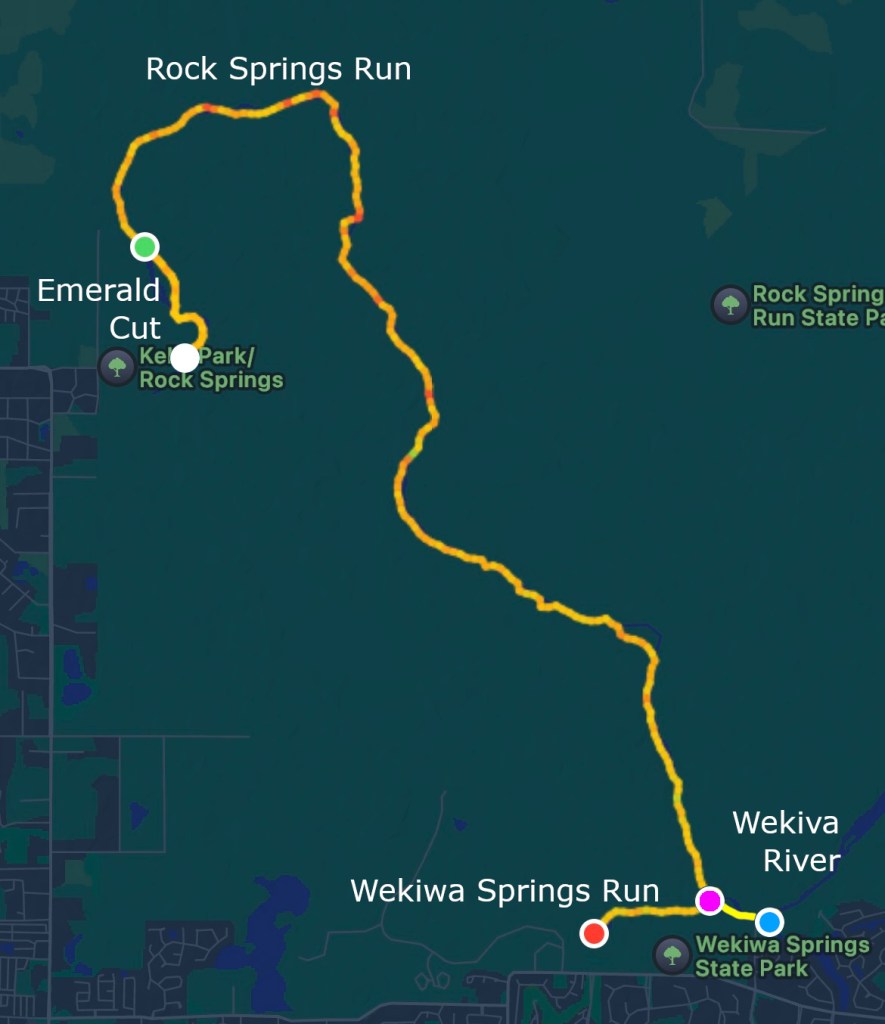
- King’s Landing – green
- Emerald Cut – white to green
- Rock Springs Run – green to pink
- Wekiwa Springs Run – red to pink
- Wekiwa Springs – red
- Wekiva River – pink to blue (and beyond)
- Wekiva Island – blue
Remy’s trip
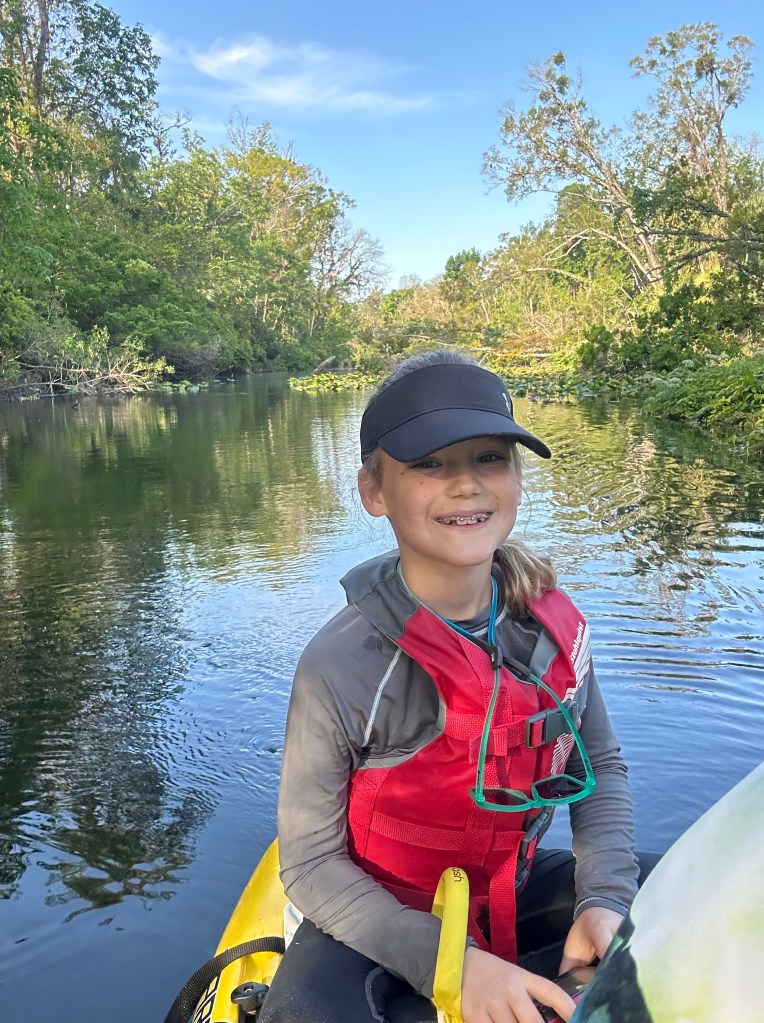
The first to make the trip with me was Remy (age 9) and Kristen. Remy rode on Kristen’s kayak. We started at King’s Landing and paddled through to Wekiwa Springs where we swam for a while before continuing on to Wekiva Island for our shuttle back to King’s Landing
Kristen made a video of our trip and posted it on Instagram. Her account is private so if you follow her, you can see it here: https://www.instagram.com/reel/DHO2MNyR1gBf1jhMnuyTkPO-CZYpE5WzLeTSIE0/
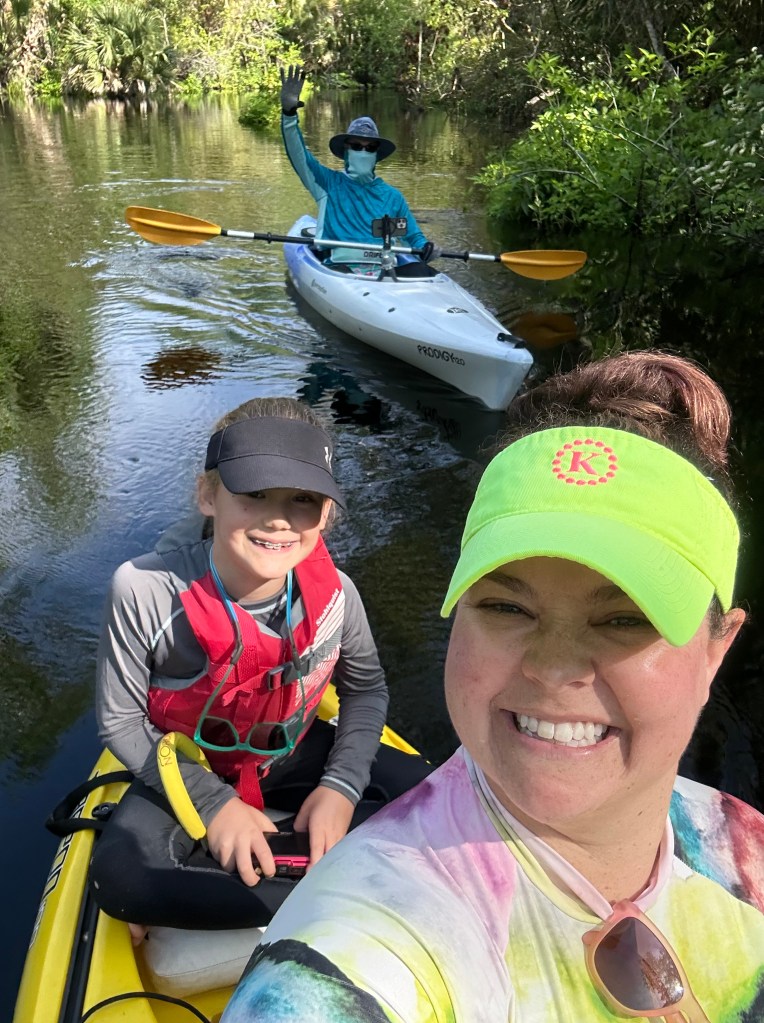



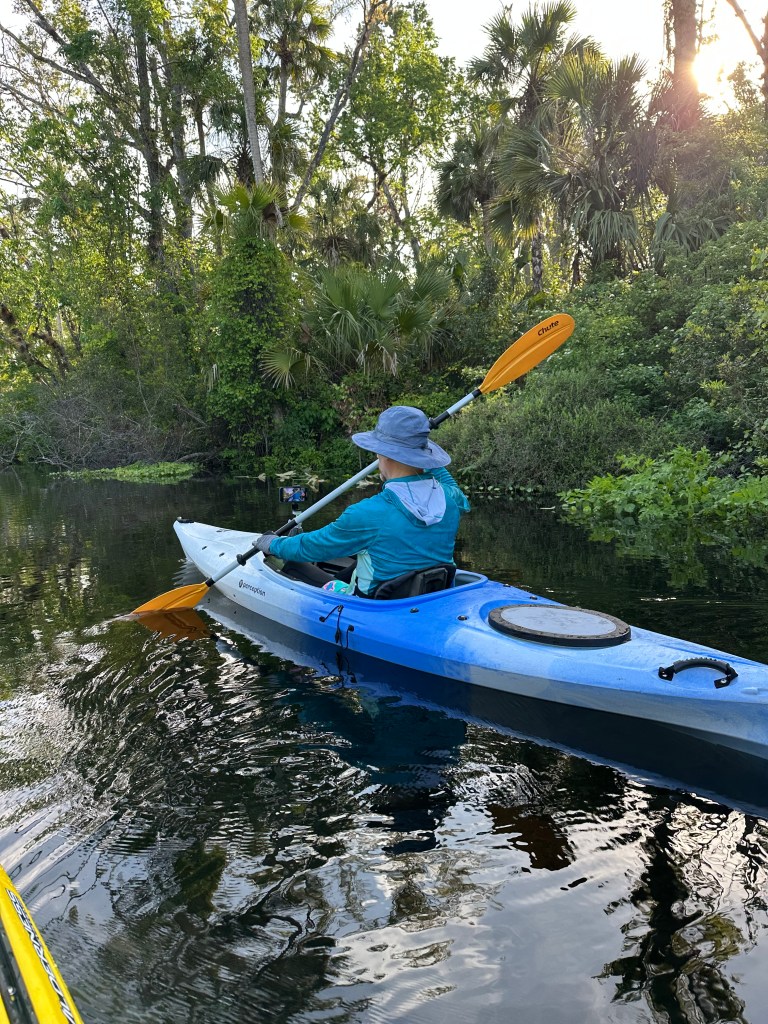
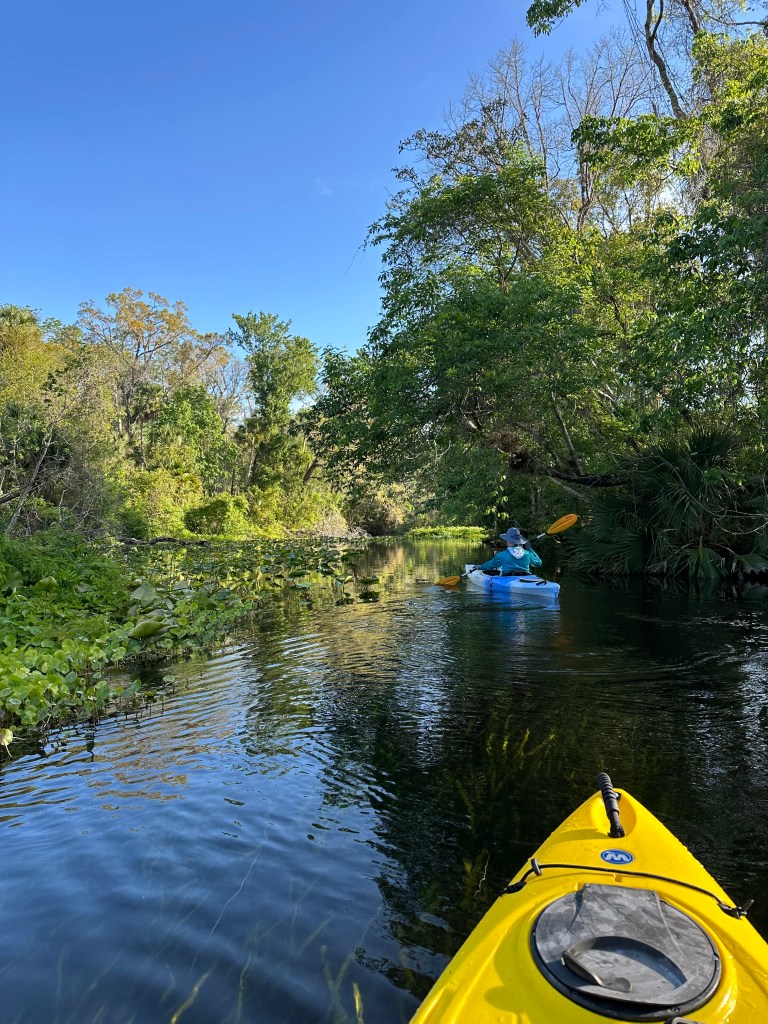
At the end of our trip, we saw a manatee! The Wekiva River is deep enough that manatees can hang out when it gets too cold and the week before our trip, it was cold enough that Wekiva Island had a few large visitors. (It’s the gray lump in this next photo)
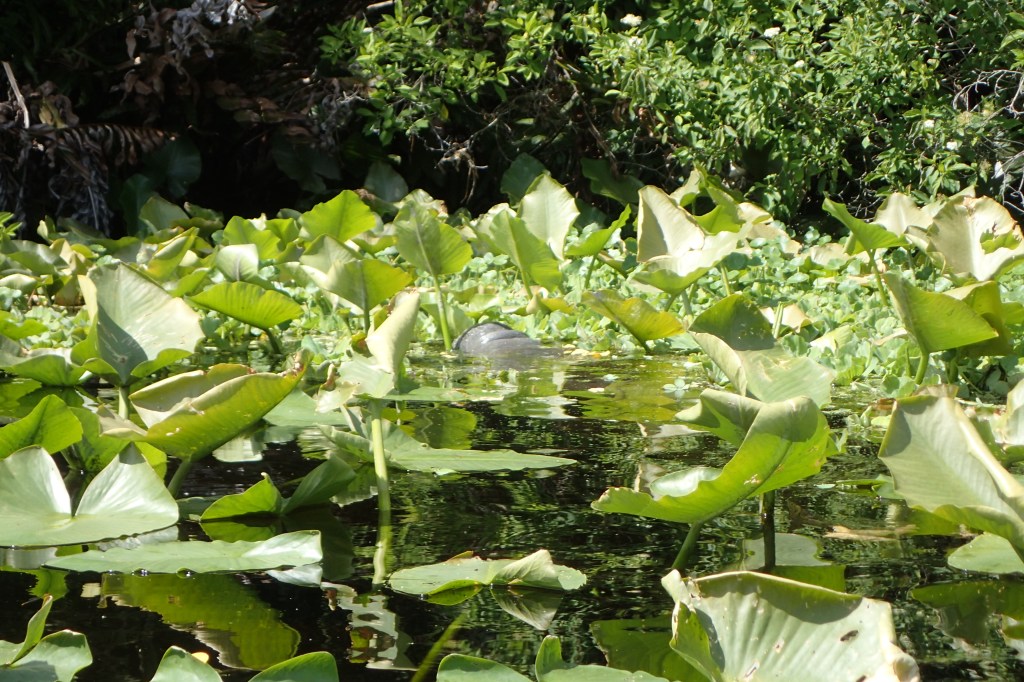
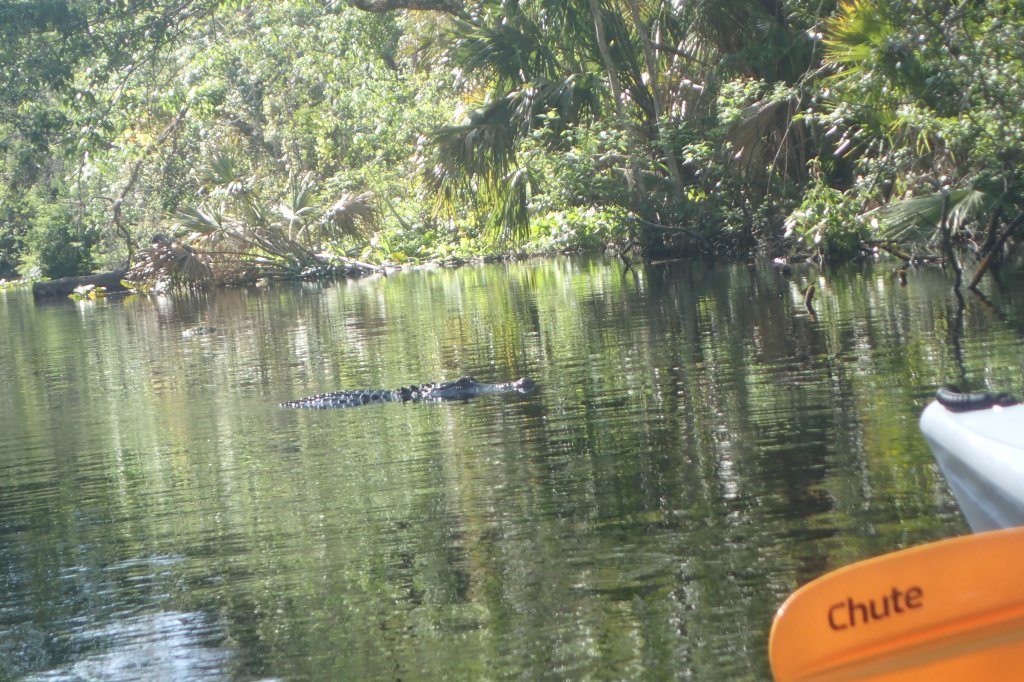
We saw a lot of wildlife! The highlights were the shy limpkins, herons, the water snake, manatee, and 23 alligators.
Jay’s Trip
Jay (age 15) accepted the challenge of paddling upstream on the Rock Springs Run starting from Wekiva Island. His goal was to paddle farther than any of his brothers, meaning he had to make it to at least mile marker 4 which would be a 9-mile round trip.
He ended up paddling the full 7.5 miles all the way to King’s Landing! It took about 4.5 hours of steady paddling and if you account for the current, it comes to around 24 miles of water paddled just on the upstream (according to my apple watch)!
Possibly because we arrived at the main alligator habitat later in the day compared to the other paddlers or possibly just due to luck, we saw a combined 40 to 50 alligators between our upstream and downstream paddle. The most unique sighting was probably this turtle, who apparently agreed to share their premium sunning location with a gator.

Once at King’s Landing, we got out of our boats, had lunch, and stretched our legs for a few minutes. After the short break, we got back in our boats and paddled the return 7.5 mile trip in a leisurely 3 hours.
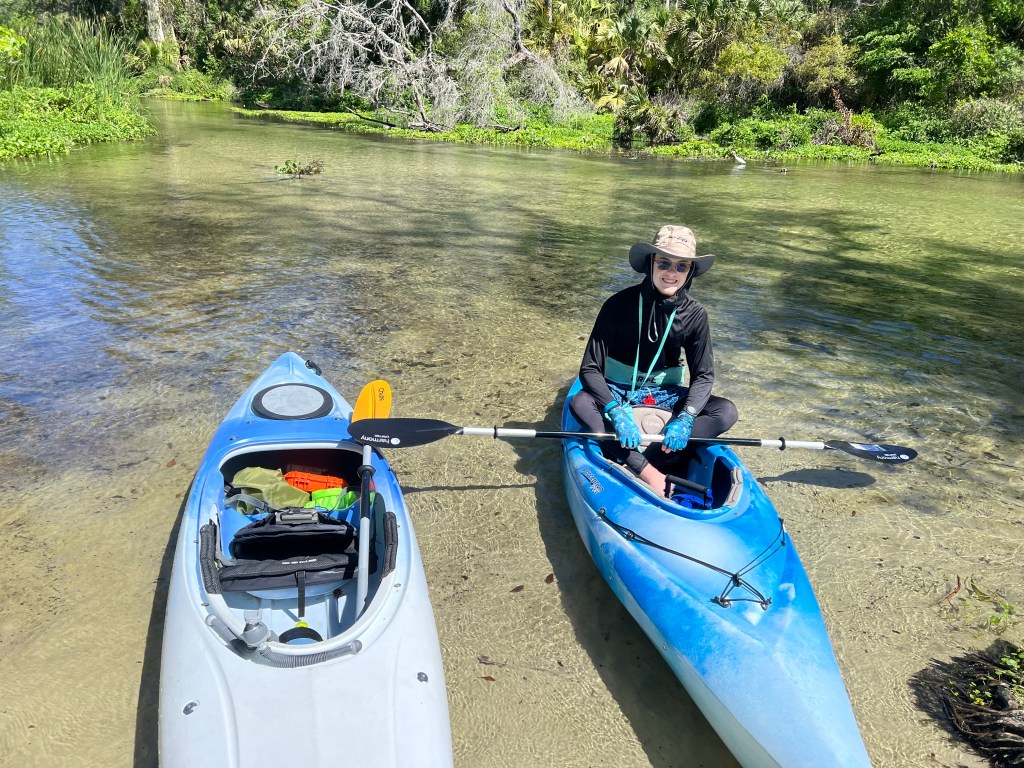
Most of the gators we see are between mile markers 2 and 5 and on this day, it seemed like there was a gator around every bend of that 3 mile stretch of river.
This gator in this last video apparently has a favorite spot to warm up, as I saw him again with Luc later in the week.
I’m so proud of Jay for tackling such a long trip. 15 miles traveled in about 7 hours! It was a great day to be out on the run.
Charlie’s Trip
Charlie (age 13) and I started our morning by launching at King’s Landing. The morning was cold with the temperature in the high 40’s as the sun was coming up. However, the spring water is around 72 degrees all year long which meant that at the start of our paddle, it looked like we were paddling through a river out of a fantasy novel, with cool steam rising all around us.
From King’s Landing, we headed upstream to paddle the Emerald Cut. The above video is from that early morning upstream paddle and if you watch the bank of the river in the above video, you might see the deer that we spotted.
Charlie’s trip wasn’t without a few gator sightings. Being a chilly morning, we think most of them were waiting in the water for the sun to get up a bit higher.
Earlier, when Remy made the trip, he amazingly spotted a brown water snake in the cattails. When Jay and I paddled by that spot, the snake was nowhere to be found but when Charlie and I went by, it was back. See if you can spot the snake in the grass like Remy did.
At the end of Rock Springs Run, Charlie and I paddled upstream to Wekiva Springs where we met Kristen, the rest of the boys, and a few of their friends for a swim.


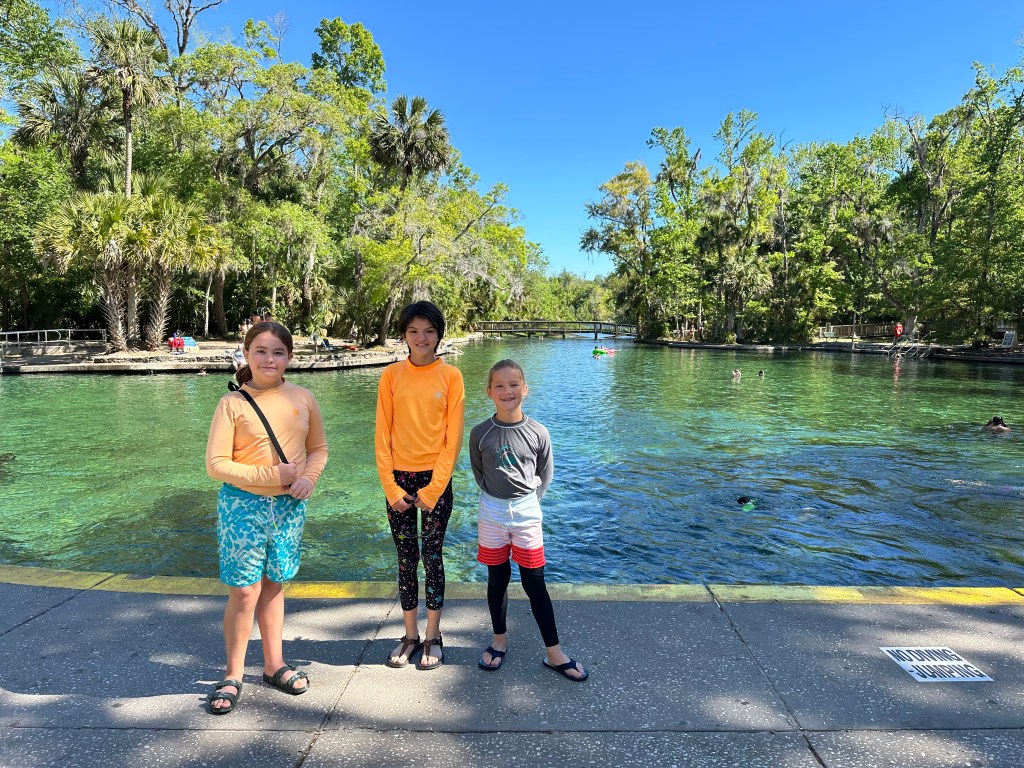
When it got close to 2:30, Charlie and I got back in our boats and headed to Wekiva Island to catch the shuttle.
Luc’s Trip
By the time Luc’s turn came around, he had listened to his brothers recount their various trips, including long lists of animal sightings (see table below). The pressure was on for him to have a great trip. Luc, at 11 years old, was the youngest to paddle the river on his own. We spent an hour the day before trying out the various kayak options to see which one would fit him the best and settled on the yellow kayak favored by Kristen.
We started our morning on the river at King’s Landing shortly after 8am and the temperature was low enough that we got to paddle through the morning steam.


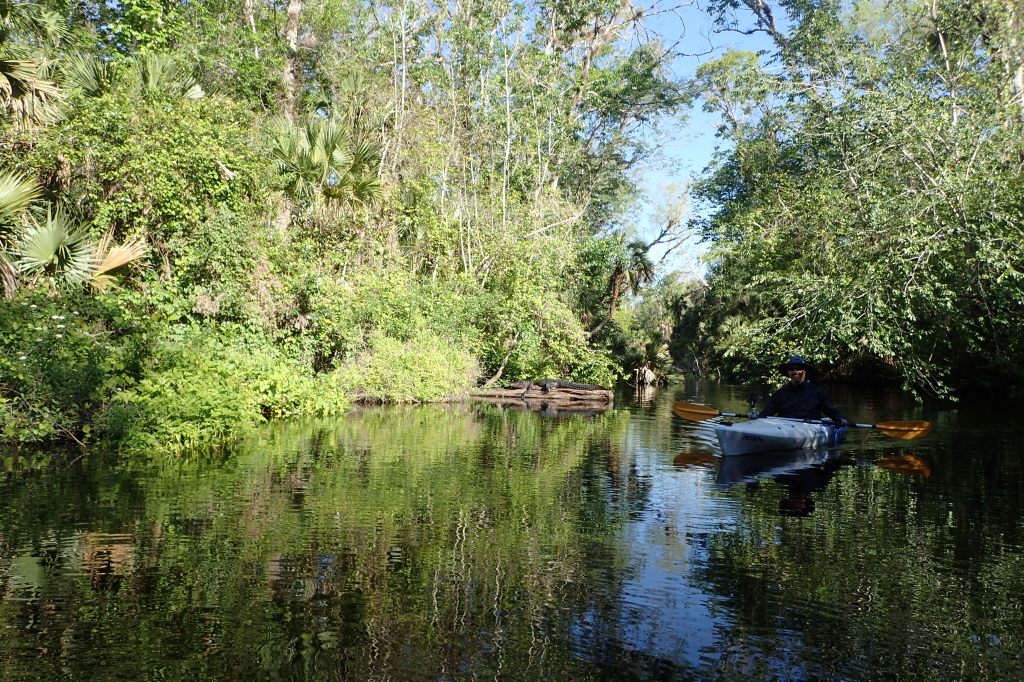
We took our time paddling downstream, knowing we had all day ahead of us.
Luc paddled through the gator habitat earlier in the day than any of his brothers, likely the reason we saw the fewest gators on this day, but that’s not to say we didn’t see plenty of big ones. Imagine seeing this ahead of you in the river:
We also saw some (probably) repeat residents, like this one
And as mentioned earlier with Jay, we saw this resident in their favorite spot, right where nobody will miss seeing their large frame

We paddled through to Wekiva Springs where we swam for an hour before heading down to Wekiva Island to catch our shuttle
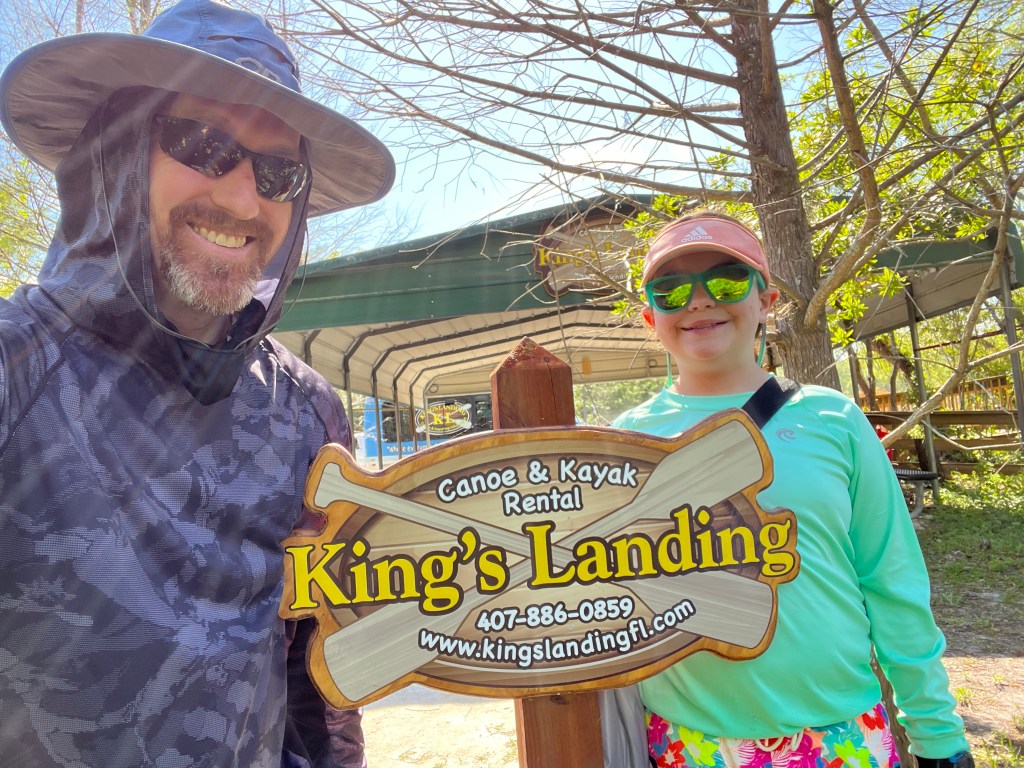
All four days were very special. I got to spend dedicated time with each of the boys, everyone had a great time, nobody lost any fingers, and – not that it’s a competition – everyone saw something unique.
I’d do it all again (and hopefully will)!
Animal Sightings
These are the ones we noted and wrote down. It’s a fun list, not an exhaustive one.
The only animal we consistently counted was alligators. To count birds and turtles would require a calculator and a notebook, there were so many seen
| Animal Sightings | Jay | Charlie | Luc | Remy (and Mom) |
|---|---|---|---|---|
| Alligators | ✅ 40-50-ish | ✅ 17 | ✅ 11 | ✅ 23 |
| Turtles | ✅ | ✅ | ✅ | ✅ |
| Softshell Turtle | ✅ | ✅ | ||
| Gopher Tortoise (threatened / endangered) | ✅ (seen from the truck) | |||
| Water Snake (non-venemous) | ✅ | ✅ | ||
| Otter | ✅ (seen from the shuttle bus) | |||
| Deer | ✅ | ✅ (seen from the truck) | ||
| Raccoon | ✅ | |||
| Manatee | ✅ | |||
| Wild Turkey | ✅ (seen from the truck) | |||
| Great Blue Heron | ✅ | ✅ | ✅ | ✅ |
| Little Blue Heron | ✅ | ✅ | ✅ | ✅ |
| Tricolor Heron | ✅ | ✅ | ||
| Green Heron | ✅ | ✅ | ✅ | ✅ |
| Kingfisher | ✅ | ✅ | ✅ | ✅ |
| “Shy” Limpkin | ✅ | ✅ | ✅ | ✅ |
| Great Egret | ✅ | ✅ | ✅ | ✅ |
| Snowy Egret | ✅ | ✅ | ✅ | ✅ |
| White Ibis | ✅ | ✅ | ✅ | ✅ |
| Swallow Tailed Kite | ✅ | ✅ | ✅ | ✅ |
| Anhinga | ✅ | ✅ | ✅ | ✅ |
| Pileated Woodpecker | ✅ | |||
| Osprey | ✅ | |||
| Night Heron | ✅ |
 the perreault family